
Magnesium Hypophosphite: Chemical Properties and Uses

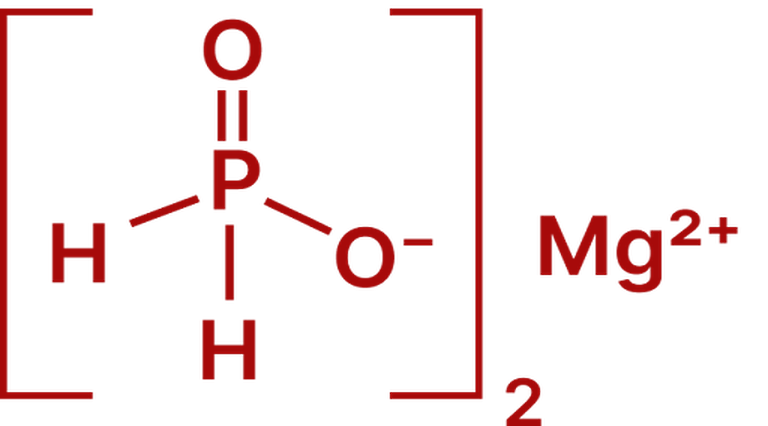
Magnesium hypophosphite is an inorganic magnesium salt of hypophosphorous acid and one of the most specialised members of the hypophosphite family. Supplied as magnesium hypophosphite hexahydrate (CAS 10377-57-8), it has become a trusted ingredient in veterinary medicine because it combines a readily available source of magnesium with full compatibility with concentrated calcium solutions.
This guide covers the chemical identity and properties of magnesium hypophosphite, its manufacture, its veterinary and industrial uses, handling and storage, and what procurement teams should look for when selecting a magnesium hypophosphite manufacturer. For an overview of the whole product family, see our guide to Hypophosphites in Industrial Applications.
1. What Is Magnesium Hypophosphite?
Magnesium hypophosphite is the magnesium salt of hypophosphorous acid (phosphinic acid). It consists of magnesium cations (Mg²⁺) and hypophosphite anions (H₂PO₂⁻) in a 1:2 ratio. The commercial product is the hexahydrate, Mg(H₂PO₂)₂·6H₂O, also known as magnesium phosphinate hexahydrate or phosphinic acid, magnesium salt, hexahydrate.
The hexahydrate designation means that six molecules of water of crystallisation are associated with each formula unit. This distinction matters in procurement: water accounts for just over 41 % of the mass, so magnesium and phosphorus contents differ substantially between hydrated and anhydrous forms, and every specification should state which basis it uses.
2. Magnesium Hypophosphite Chemical Properties
Property | Magnesium Hypophosphite Hexahydrate |
Chemical name | Magnesium hypophosphite hexahydrate (magnesium phosphinate hexahydrate) |
CAS number | 10377-57-8 |
EC number | 233-824-6 |
Chemical formula | Mg(H₂PO₂)₂·6H₂O |
Molecular weight | 262.38 g/mol (anhydrous salt 154.3 g/mol) |
Composition | ≥ 98 % |
Magnesium content | 9.3 % (anhydrous basis 15.8 %) |
Phosphorus content | 23.6 % (anhydrous basis 40.2 %) |
Water of crystallisation | 41.2 % |
Phosphorus oxidation state | +1 |
Appearance | White powder or crystals |
pH (aqueous solution) | 4.5–6.0 |
Water solubility | Soluble; approximately 20 g per 100 mL at 20 °C |
Stability | Stable under recommended storage conditions |
2.1 Molecular Structure
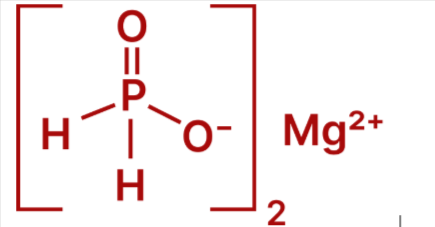
The hypophosphite anion is tetrahedral, with phosphorus bonded to two hydrogen atoms and two oxygen atoms. The two P–H hydrogens are not acidic, so hypophosphorous acid is monoprotic and forms a single, well-defined series of hypophosphite salts.
In the solid hexahydrate, magnesium is octahedrally coordinated by six water molecules. The structure is best described as [Mg(H₂O)₆]²⁺ cations and H₂PO₂⁻ anions linked by an extensive hydrogen-bond network. This ordered structure gives the salt its consistent crystalline form and means that, on dissolution, magnesium is delivered directly as the hydrated ion.
2.2 Reducing Chemistry
Phosphorus in the +1 oxidation state gives the hypophosphite anion strong reducing character, oxidising first to phosphite and then to orthophosphate:
H₂PO₂⁻ → HPO₃²⁻ → PO₄³⁻
This reducing capacity underpins the value of hypophosphites in electroless plating and fine chemical synthesis, and magnesium hypophosphite offers it in combination with a magnesium counter-ion.
2.3 Solution Behaviour
Magnesium hypophosphite hexahydrate dissolves readily in water to give a mildly acidic solution with a pH of 4.5–6.0. Its solubility lies between that of calcium hypophosphite and sodium hypophosphite and is well suited to veterinary formulation: it dissolves easily at the 5–9 % w/v concentrations used in commercial injections and crystallises cleanly from concentrated solution, which is what makes high-purity grades achievable.
3. How Magnesium Hypophosphite Is Manufactured
Magnesium hypophosphite is produced by neutralising hypophosphorous acid with a high-purity magnesium base such as magnesium oxide, hydroxide or carbonate, followed by crystallisation of the hexahydrate:
MgO + 2 H₃PO₂ + 5 H₂O → Mg(H₂PO₂)₂·6H₂O
Because the route uses only the acid and the magnesium base, no foreign anions or by-product salts are introduced, which allows a pure, consistent grade to be produced. Manufacturers like NEEMCCO that produce their own hypophosphorous acid control purity from the very first step of the process, a clear advantage for customers who need consistent pharmaceutical and veterinary grades.
4. Magnesium Hypophosphite Uses and Applications
4.1 Veterinary Uses: Milk Fever, Hypomagnesaemia and Grass Tetany
Parturient hypocalcaemia, commonly called milk fever, is one of the most frequent metabolic disorders in high-yielding dairy cows, caused by the sudden calcium demand at the onset of lactation. It rarely occurs in isolation: studies have found that around 87–90 % of cows with parturient paresis have below-normal serum concentrations of both calcium and inorganic phosphorus, and hypomagnesaemia is common in the same period.
Magnesium is central to recovery. It is required both for parathyroid hormone secretion and for tissue responsiveness to that hormone, so a cow with adequate magnesium is better equipped to mobilise calcium from bone and absorb it from the gut, supporting a more complete recovery following calcium therapy. Magnesium supply is equally important in hypomagnesaemic tetany (grass tetany), which affects cattle and sheep grazing lush spring pasture. In ewes around lambing, hypocalcaemia, hypomagnesaemia and pregnancy toxaemia often occur together and are treated with combined mineral and energy therapy.
4.2 Why Magnesium Hypophosphite Is Used with Calcium Borogluconate
A combined calcium–magnesium injection needs a magnesium salt that remains in solution alongside a very high concentration of calcium. Magnesium hypophosphite meets this requirement well. The hypophosphite anion stays compatible with calcium at therapeutic concentrations, so a single clear, stable solution can deliver both minerals in one administration.
Regulatory product summaries describe calcium borogluconate and magnesium hypophosphite as soluble salts of calcium and magnesium used extensively in fluid infusions for the correction of metabolic disturbances. Controlled research confirms effective magnesium delivery: in cows receiving magnesium hypophosphite in calcium borogluconate, serum magnesium rose in every animal treated, while it remained unchanged in those given calcium alone.
For the veterinarian, this means one injection addresses both deficiencies. For the formulator, it means a product with a long shelf life, straightforward manufacture and a well-established regulatory history.
4.3 Authorised Veterinary Formulations
Magnesium hypophosphite hexahydrate is an active substance in authorised veterinary medicines across the United Kingdom, Ireland, continental Europe and South Asia.
The most widely used formulation combines 40 % w/v calcium borogluconate with 5 % w/v magnesium hypophosphite hexahydrate. Each 400 mL delivers 11.9 g of calcium and 1.85 g of magnesium from the magnesium hypophosphite. It is indicated for hypocalcaemia in cattle where increased blood magnesium levels are also required, and is administered at 200–400 mL by subcutaneous or slow intravenous injection with zero withdrawal periods for meat, offal and milk. Zero withdrawal is a significant commercial benefit to dairy farmers, since milk from treated cows can go straight back into supply.
Formulation | Calcium source | Magnesium hypophosphite hexahydrate | Species |
40 % CBG with magnesium | Calcium borogluconate 40 % w/v | 5 % w/v | Cattle |
20 % CBG with magnesium and dextrose | Calcium gluconate / borogluconate | 5 % w/v, with 22 % glucose monohydrate | Sheep |
Calcium gluconate with magnesium | Calcium gluconate 28 % w/v | 9 % w/v | Cattle |
Calcium–magnesium combination (EU) | Calcium borogluconate | 8 mg per mL | Cattle |
The ovine formulation is indicated for hypocalcaemia complicated by magnesium deficiency with accompanying hypoglycaemia, and for pregnancy toxaemia in periparturient ewes. A South Asian product contains 28 g calcium gluconate and 9 g magnesium hypophosphite hexahydrate per 100 mL, and some European authorisations extend to cattle, sheep and pigs, all with zero-day withdrawal periods.
4.4 Flame Retardant & Reducing Agent
Beyond veterinary medicine, magnesium hypophosphite serves as a reducing agent in fine chemical synthesis, laboratory use and specialty processes. The magnesium counter-ion gives a by-product profile distinct from sodium hypophosphite, which is useful wherever sodium must be kept out of the process.
The salt also has a long pharmaceutical heritage. Compound syrups of hypophosphites were widely dispensed as tonics from the mid-nineteenth century onward, and magnesium hypophosphite was one of their standard constituents.
Magnesium Hypophosphite is also industrially used as a halogen free flame retardant in plastics and resins. Especially in engineering plastics such as PP, PBT, PC it achieves UL94 V0. However, Aluminum Hypophosphite is a more efficient flame retardant for these applications because of its higher phosphorus content. For any industrial application, suitability should be confirmed against the process requirements, including required composition, physical form, solubility and compatibility with the other components.
5. Magnesium Hypophosphite Hexahydrate: Handling and Storage
Magnesium hypophosphite hexahydrate should be stored in a dry, well-ventilated area with the container kept tightly closed. Adequate ventilation should be used during handling, and dust formation avoided.
The material should not be heated above 200 °C, as hypophosphites decompose at elevated temperatures and can release phosphine gas. Strong acids and oxidising agents are incompatible materials and should be stored separately. Under recommended conditions the product is stable and retains its crystalline form and assay. Users should always consult the current Safety Data Sheet and applicable workplace regulations before handling.
In the United States, hypophosphorous acid and its salts, including magnesium hypophosphite, are designated List I chemicals under the Controlled Substances Act, and supply runs through DEA-registered channels. NEEMCCO USA LLC holds DEA registration and handles compliant distribution to North American customers.
6. Magnesium Hypophosphite Manufacturer and Supplier
Selecting a magnesium hypophosphite manufacturer involves more than comparing product names. Procurement and technical teams should confirm:
- Chemical identity: the hydrated or anhydrous form and the corresponding CAS number.
- Composition and assay: purity, and the basis on which magnesium and phosphorus contents are stated.
- Physical form: whether powder or crystalline material suits the process.
- Solubility and solution clarity: at the working concentration.
- Impurity profile: phosphite and phosphate, sulphate, chloride, iron, and heavy metals and arsenic within pharmacopoeial limits.
- Documentation: current SDS, certificate of analysis and technical data sheet, and for veterinary use, GMP certification.
- Packaging and supply reliability: consistent quality between batches and reliable change control.
For veterinary formulators these points carry particular weight. Magnesium hypophosphite goes into a sterile parenteral product, so solution clarity, controlled oxidation-product levels and a tight assay translate directly into a finished medicine that meets its label claim throughout its shelf life. Decades of experience in hypophosphite manufacture, together with control over the upstream hypophosphorous acid, are the surest foundations for that consistency.
NEEMCCO supplies magnesium hypophosphite hexahydrate, CAS 10377-57-8, with a composition of ≥ 99%. Specifications, SDS and samples are available via the Magnesium Hypophosphite product page.
7. Frequently Asked Questions About Magnesium Hypophosphite
Q1. What is magnesium hypophosphite?
Answer: Magnesium hypophosphite is an inorganic magnesium salt of hypophosphorous acid. It is supplied as magnesium hypophosphite hexahydrate, CAS 10377-57-8, with the formula Mg(H₂PO₂)₂·6H₂O.
Q2. What is the chemical formula of magnesium hypophosphite hexahydrate?
The formula is Mg(H₂PO₂)₂·6H₂O, with a molecular weight of 262.38 g/mol.
Q3. What are the chemical properties of magnesium hypophosphite?
Answer: It is a white powder or crystalline solid, soluble in water (approximately 20 g per 100 mL at 20 °C). Its aqueous solution has a pH of 4.5–6.0, and it is stable under recommended storage conditions. Its phosphorus is in the +1 oxidation state, giving it strong reducing properties.
Q4. What is magnesium hypophosphite used for?
Answer: Its principal use is as an active ingredient in veterinary calcium–magnesium injections for milk fever, hypomagnesaemia and related metabolic disorders in cattle and sheep. It is also used as a reducing agent in fine chemical synthesis, chemical plating and laboratory applications.
Q5. Why is magnesium hypophosphite combined with calcium borogluconate?
Answer: The hypophosphite anion is compatible with concentrated calcium, allowing magnesium and calcium to be delivered together in one clear, stable injection.
Q6. How is magnesium hypophosphite made?
Answer: It is made by neutralising hypophosphorous acid with magnesium oxide, hydroxide or carbonate, followed by crystallisation of the hexahydrate.
Q7. How should magnesium hypophosphite be stored?
Answer: In a tightly closed container in a dry, well-ventilated area, away from strong acids and oxidising agents. It should not be heated above 200 °C.
Q8. Is magnesium hypophosphite a regulated chemical?
Answer: In the United States it is a DEA List I chemical, together with hypophosphorous acid and its other salts.
Q9.How can I source magnesium hypophosphite from a supplier?
Answer: Compare chemical form, composition, impurity profile, documentation and supply reliability. NEEMCCO manufactures magnesium hypophosphite hexahydrate in Mumbai and supplies customers worldwide, with technical data and samples available on request.
8. Summary
Property | Benefit to the user |
Compatible with concentrated calcium | Magnesium and calcium in one clear, stable injection |
Good water solubility | Formulates readily at 5–9 % w/v |
Stable crystalline hexahydrate, ≥ 98 % | Easy handling, long storage life, consistent assay |
Proven magnesium delivery | Raises serum magnesium alongside calcium therapy |
Established regulatory history | Active in authorised products across Europe and Asia, with zero withdrawal periods |
Reducing hypophosphite anion | Useful in fine chemical synthesis and plating |
Magnesium hypophosphite has earned its place in veterinary medicine because its chemistry solves a real formulation problem: delivering magnesium together with high concentrations of calcium in a single, stable solution. Choosing an experienced, GMP-certified manufacturer is what ensures the finished product performs consistently from batch to batch.
NEEMCCO has manufactured hypophosphites in Mumbai since 1969 and was India’s first producer of this chemistry. Our range comprises hypophosphorous acid together with sodium, calcium, magnesium, potassium and aluminium hypophosphites. NEEMCCO is ISO 9001:2015 and WHO-GMP certified, with DEA-registered distribution in North America through NEEMCCO USA LLC. For technical data sheets, samples or a quotation for magnesium hypophosphite, contact office@neemcco.com.
Transforming Materials. Powering Industries.