Hypophosphorous Acid as a Reducing Agent: How It Works and Where It Is Used

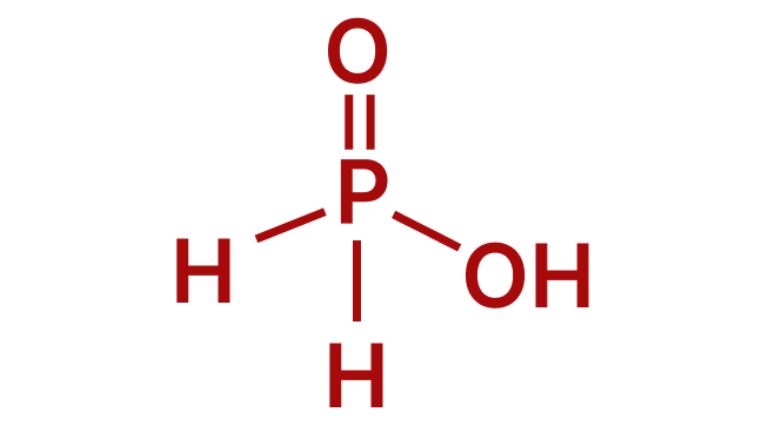
Hypophosphorous acid (H₃PO₂, CAS 6303-21-5), systematically named phosphinic acid, is the lowest-valent of the common phosphorus oxyacids. Its phosphorus atom is in the +1 oxidation state and carries two directly bonded hydrogen atoms in the tautomer H₂P(O)OH. This structure gives the compound two distinct chemical functions. The single hydroxyl proton makes it a strong monobasic acid (pKa ≈ 1). The two P–H bonds make it a powerful two-electron reductant (E°(H₃PO₃/H₃PO₂) = −0.50 V) and an efficient hydrogen-atom donor in radical chain reactions. Through these pathways H₃PO₂ reduces arenediazonium salts to arenes, metal cations to the zero-valent metal, and oxygen and peroxides to water. It is itself oxidised to phosphorous acid and ultimately to phosphoric acid. These reactions underpin its industrial use as a deamination reagent in fine-chemical synthesis and as the parent compound of the hypophosphite reductants used in electroless nickel deposition. They also explain its role as a combined antioxidant and condensation catalyst in polyester, alkyd, polyamide and rosin-ester resin manufacture. This article examines the structure and redox chemistry of hypophosphorous acid, the principal reaction classes in which it is used, and the industrial processes that depend on them.
Structure and Bonding
The empirical formula H₃PO₂ suggests a triprotic acid like phosphoric acid, but the molecule is better written as H₂P(O)OH. Phosphorus is tetrahedrally coordinated to one oxo group, one hydroxyl group and two hydrogen atoms. The tautomeric equilibrium with the trivalent form HP(OH)₂ lies almost entirely on the side of the pentavalent P(=O)H structure.
This bonding arrangement explains the two characteristic properties of the acid. Only the hydroxyl proton is ionisable, so hypophosphorous acid is monoprotic and forms a single series of salts, the hypophosphites, H₂PO₂⁻. The two hydrogen atoms bonded to phosphorus are not acidic, but they are chemically active. Through them the molecule acts as an electron donor and as a hydrogen-atom donor, and its behaviour as a reducing agent follows from this.
Property | Value |
IUPAC name | Phosphinic acid |
Structural formula | H₂P(O)OH |
CAS number | 6303-21-5 |
Molar mass | 66.00 g/mol |
Oxidation state of P | +1 |
pKa | ≈ 1 |
Melting point (anhydrous) | 26.5 °C |
Solubility | Miscible with water; very soluble in ethanol and ether |
Commercial form | Colourless aqueous solutions, typically 30%, 50% and 80% w/w |
Redox Behaviour
Phosphorus in hypophosphorous acid has a formal oxidation state of +1. It can be oxidised in two-electron steps, first to phosphorous acid (+3) and then to phosphoric acid (+5). The standard potential for the first step is strongly negative:
H₃PO₃ + 2H⁺ + 2e⁻ ⇌ H₃PO₂ + H₂O E° = −0.50 V
The corresponding H₃PO₄/H₃PO₃ couple lies at −0.28 V, so hypophosphorous acid is the most powerful reductant among the common phosphorus oxyacids. It reduces ions of silver, copper, nickel, cobalt and platinum to the metal, converts iodine to hydriodic acid, and reacts readily with dissolved oxygen and peroxides. The hypophosphite ion becomes a stronger reductant as pH rises. The same chemistry can therefore be used as the free acid in acidic media and as a hypophosphite salt in neutral or alkaline systems.
H₃PO₂ reduces by two distinct mechanisms. In aqueous and ionic chemistry, it transfers electrons to metal ions, oxygen and other oxidising species. In organic chemistry, the relatively weak P–H bond takes part in radical chain reactions: it donates a hydrogen atom to a carbon-centred radical and forms a phosphorus-centred radical that propagates the chain. These two modes cover most of the industrial uses described below.
Principal Reaction Classes
Reductive deamination of arenediazonium salts
The best-known synthetic use of hypophosphorous acid is replacing an aromatic diazonium group with hydrogen:
Ar–N₂⁺ + H₃PO₂ + H₂O → Ar–H + N₂ + H₃PO₃ + H⁺
The reaction proceeds by a free-radical chain mechanism. Electron transfer to the diazonium ion releases nitrogen and forms an aryl radical. The aryl radical abstracts a hydrogen atom from H₃PO₂, and the resulting phosphorus-centred radical reduces the next diazonium ion, propagating the chain.
The practical value of the reaction is strategic. An amino group strongly directs electrophilic substitution on an aromatic ring. Once it has placed substituents in the required positions, it can be diazotised and removed with H₃PO₂, giving substitution patterns that are hard to reach directly. The sequence is widely used to prepare intermediates for dyes, pigments, agrochemicals and pharmaceuticals.
Radical deoxygenation and dehalogenation
Radical reductions of alkyl halides and of thiocarbonyl derivatives of alcohols were traditionally carried out with organotin hydrides. Hypophosphorous acid and its salts are an effective tin-free alternative for radical chain deoxygenation and dehalogenation, including of nucleoside derivatives. Because the phosphorus by-products are water-soluble, they are removed in a simple aqueous work-up, which makes this route attractive in pharmaceutical synthesis.
Catalytic transfer hydrogenation
With palladium catalysts, hypophosphite serves as a convenient hydrogen donor for reducing a range of organic functional groups. Because these reactions need no pressurised hydrogen gas, they can be run in standard reactors.
Formation of phosphorus–carbon bonds
The P–H bonds of hypophosphorous acid and its derivatives add across carbon–carbon double and triple bonds to form H-phosphinic and phosphinic acids, under either metal catalysis or radical initiation. This chemistry links hypophosphorous acid to a wide range of organophosphorus products, including dialkylphosphinate flame retardants, metal extractants and pharmaceutical intermediates.
Reduction of oxidising species: antioxidant action
The same reducing power that converts metal ions to metal also lets hypophosphorous acid act as a sacrificial antioxidant. In high-temperature organic processes, it scavenges oxygen and reduces peroxides and other oxidising species before they can attack the product. It is itself converted to phosphorous and phosphoric acid species. This is the basis of its widespread use in resin and ester manufacture, described in detail below.
Industrial Applications
Resin manufacture: polyester, alkyd, polyamide and rosin-ester resins
Colour is one of the most closely watched specifications in resin manufacturing. Polyester, alkyd, polyamide and rosin-ester resins are all made by condensation reactions at 200–280 °C, often over many hours. Under these conditions, traces of oxygen, metal impurities and unsaturated raw materials drive thermo-oxidative side reactions that form conjugated carbonyl and quinonoid chromophores, which yellow or darken the product. A darker resin limits its use in clear coatings, light-coloured paints, adhesives, inks and engineering plastics.
Hypophosphorous acid tackles this problem in two ways at once. As a reducing antioxidant, it intercepts oxidising species before chromophores can form. As a strong acid, it catalyses esterification and amidation. Faster reactions mean shorter cycle times or lower reaction temperatures, and both further reduce the thermal history that causes colour. Few additives combine colour protection and catalysis in one molecule, which is why hypophosphorous acid is so widely specified in resin manufacture.
Polyester resins
Saturated and unsaturated polyesters are made by polycondensation of polyols with dicarboxylic acids or anhydrides, usually above 200 °C. Adding hypophosphorous acid to the polycondensation mixture, typically at 0.3–1% of the resin charge, prevents the yellowing that otherwise develops. In one reported process that makes polyester resin from depolymerised polyester, hypophosphorous acid gave an almost colourless resin with a Hazen colour below 100. Without the additive the resin was yellow, with a Hazen colour above 500. This is particularly relevant as producers turn to recycled feedstocks, which carry a heavier oxidative history than virgin raw materials.
Alkyd resins
Alkyds are polyesters modified with drying or semi-drying fatty acids or oils, and their unsaturated chains are especially prone to oxidation during processing. Colour control is critical for clear varnishes, wood finishes and white or pastel enamels. Hypophosphorous acid is used in alkyd manufacture as an esterification catalyst and colour-protecting additive, typically at 0.3–1% of the reactor charge. Its catalytic activity allows esterification at a lower temperature than conventional methods. In one reported process, the resulting alkyd had a colour of 4 or less on the iron–cobalt scale, against 8 or darker for resins made by the traditional route.
Polyamide resins
Polyamides are made by melt polycondensation at temperatures where the amine end groups are particularly sensitive to oxidation. Hypophosphorous acid, typically added at 0.3–1%, suppresses oxidative and thermal degradation, lowering the Yellowness Index of the finished polymer and improving colour retention in storage. In one study on amorphous polyamides, adding hypophosphorous acid during melt preparation gave a polymer solution described as “water white”, compared with the yellow-gold colour obtained without it. Hypophosphite is also an effective amidation catalyst and has been used as the primary catalyst in nylon 6,6 synthesis to reach higher molecular weight within a given reaction time.
Rosin ester resins
Rosin esters are made by esterifying gum, wood or tall-oil rosin with glycerol or pentaerythritol. They are important tackifiers for hot-melt and pressure-sensitive adhesives and binders for printing inks. Rosin esterification is notoriously slow, and long reaction times darken the product. Hypophosphorous acid, typically used at 0.3–1% on rosin, addresses both problems. In rosin–pentaerythritol esterification, it has been shown to roughly halve the time needed to reach the target acid number, from about 45 hours to 18–24 hours. The ester was only 0–2 Gardner units darker than the starting rosin, against 3–8 units without the additive. In maleic-modified rosin esters, hypophosphorous acid improved Gardner colour from 11 to 8, and also improved softening point and solution viscosity.
Fatty-acid esters and resin intermediates
The same reducing action protects ester products and intermediates used in resin formulations. At 0.3–1%, hypophosphorous acid markedly improves the colour of fatty-acid esters. In the production of para-cumylphenol, a chain terminator for polycarbonate, it has reduced APHA colour from 250 to 23 units and given a final product of APHA 5 or below.
Resin system | Typical H₃PO₂ dosage | Benefit |
Polyester resin | 0.3–1% | Near-colourless resin; Hazen colour below 100, versus above 500 without additive |
Alkyd resin | 0.3–1% | Fe–Co colour ≤4, versus ≤8 conventionally; lower esterification temperature |
Polyamide | 0.25–0.85% | "Water white" polymer, versus yellow-gold without additive; faster amidation |
Rosin ester | 0.5–1% on rosin | Reaction time roughly halved; colour within 0–2 Gardner units of the starting rosin |
Fatty-acid esters | 0.5–1% | Markedly lighter, colour-stable esters |
A dosage of 0.3–1% hypophosphorous acid on the total resin charge gives effective colour protection and catalytic activity across polyester, alkyd, polyamide and rosin-ester systems. Because hypophosphorous acid works by preventing oxidation rather than reversing it, it is generally added with the initial reactor charge, so it is present throughout the high-temperature stage.
Surfactants and oleochemicals
The same combination of catalysis and colour control is used in surfactant manufacture. In producing acyl isethionates, the mild surfactants used in syndet bars and personal-care products, hypophosphorous acid serves as an esterification catalyst, alone or with methanesulfonic acid. In methanesulfonic-acid-catalysed esterification of free fatty acids, it has also been shown to considerably limit corrosion of stainless-steel equipment while preserving high conversion.
Electroless nickel plating
Electroless nickel–phosphorus deposition is the largest single industrial application of hypophosphite chemistry. Nickel ions are reduced to the metal at a catalytic surface with no external current:
Ni²⁺ + H₂PO₂⁻ + H₂O → Ni + H₂PO₃⁻ + 2H⁺
Part of the phosphorus co-deposits with the nickel, and its content largely determines the coating’s properties:
Deposit type | P content | Characteristic performance |
Low-phosphorus | 1–4% | Superior resistance in alkaline and caustic media |
Medium-phosphorus | 5–9% | General-purpose engineering coating |
High-phosphorus | >9% | Superior resistance in acidic media; after heat treatment, hardness |
comparable to hard chromium |
Hypophosphorous acid is the parent compound of this chemistry. It is the precursor of sodium and nickel hypophosphite and is also used in bath formulation and pH adjustment.
Pharmaceutical synthesis
In pharmaceutical manufacture, hypophosphorous acid is used as a process reagent for diazonium deamination, tin-free radical reductions and transfer hydrogenation. It is also used as a phosphorus building block. It is the phosphorus source for butafosfan, a veterinary metabolic stimulant made by adding H₃PO₂ to the imine formed from n-butylamine and acetone. In a regulated setting, the reagent must meet a controlled impurity profile, show reproducible quality from batch to batch and come with full analytical documentation.
Hypophosphite salts and organophosphorus intermediates
Hypophosphorous acid is the starting material for the hypophosphite family. This includes sodium hypophosphite for plating and polymer catalysis, calcium and magnesium hypophosphite for specialty applications, and aluminium hypophosphite as a halogen-free flame retardant. It is also the source of the phosphinic acid intermediates described above.
Commercial Grades: Hypophosphorous Acid 50 and 80
Hypophosphorous acid is supplied as aqueous solutions, and the grade designation gives the H₃PO₂ content by weight. Hypophosphorous Acid 50 is the concentration most often specified in industrial processes, including resin, esterification and salt manufacture. It is easy to meter, and in condensation reactions its water content is removed with the water of reaction. Hypophosphorous Acid 80 delivers more active material per kilogram and carries less water into the process. This suits water-sensitive reactions and lowers freight cost per unit of H₃PO₂ over long distances.
Neither grade is better in absolute terms. The right choice depends on the process water balance, the active quantity needed per batch, dosing and storage arrangements, logistics and the specification the process was validated against. NEEMCCO manufactures hypophosphorous acid at 30%, 50% and 80% w/w, so a grade can be matched to each process.
Sourcing Considerations
Hypophosphorous acid is used in colour-critical, catalytic and regulated processes, so buyers should evaluate suppliers on more than concentration and price. Relevant parameters include:
- Phosphite and phosphate content
- Anionic impurities such as sulphate and chloride
- Iron and heavy metals
- APHA colour
- Batch-to-batch consistency
- Availability of a batch-specific Certificate of Analysis and a current Safety Data Sheet
For resin applications in particular, low iron and metal content matter, because metal traces catalyse the very oxidation the additive is meant to prevent. For pharmaceutical supply chains, ISO 9001:2015 and WHO-GMP certification make qualification considerably simpler. Quotations for hypophosphorous acid are only comparable when they refer to the same concentration, specification, packaging, quantity and destination.
In the United States, hypophosphorous acid and its salts are List I chemicals under DEA regulation. No threshold quantity applies, so every transaction is regulated, and importers and distributors must hold DEA registration. NEEMCCO supplies the North American market through NEEMCCO USA LLC in Chicago, which holds the DEA registration and handles distribution. In Japan, where requirements for specification and documentation are among the most demanding in the world, NEEMCCO has a long record of supply to industrial customers.
About NEEMCCO
NEEMCCO was established in Mumbai in 1969 and is India’s first manufacturer of hypophosphites. The company produces hypophosphorous acid together with sodium, calcium, magnesium and aluminium hypophosphite. It supplies resin, polymer, pharmaceutical, plating and specialty-chemical manufacturers in Asia, the Middle East, Europe and North America, and its operations are certified to ISO 9001:2015 and WHO-GMP. For specifications, samples or pricing, contact NEEMCCO with the required concentration, quantity, application and destination.
Frequently Asked Questions
Q1. Why is hypophosphorous acid a reducing agent?
Answer: The molecule contains two P–H bonds, and phosphorus is in the +1 oxidation state. It is readily oxidised to phosphorous acid (E° = −0.50 V for the H₃PO₃/H₃PO₂ couple), donating electrons or hydrogen atoms to the species being reduced.
Q2. Why is H₃PO₂ monobasic despite having three hydrogens?
Answer: Its structure is H₂P(O)OH. Only the hydroxyl proton is ionisable; the two hydrogens bonded to phosphorus are not acidic.
Q3. How does hypophosphorous acid reduce diazonium salts?
Answer: By a free-radical chain mechanism. An aryl radical abstracts hydrogen from H₃PO₂, and the phosphorus-centred radical formed reduces the next diazonium ion.
Q4. How does hypophosphorous acid prevent discolouration in resins?
Answer: It acts as a reducing antioxidant and oxygen scavenger, intercepting oxidising species during high-temperature condensation before they form colour bodies. As an acid catalyst it also shortens reaction times, which further reduces colour formation.
Q5. Which resins benefit from hypophosphorous acid?
Answer: Saturated and unsaturated polyesters, alkyds, polyamides, rosin esters and fatty-acid esters. All are made by high-temperature condensation, where oxidation is the main cause of colour.
Q6. How much hypophosphorous acid is used in resin manufacture?
Answer: A dosage of 0.3–1% on the total resin charge is typical for polyester, alkyd, polyamide and rosin-ester resins. It is normally added with the initial reactor charge.
Q7. What is the difference between Hypophosphorous Acid 50 and Hypophosphorous Acid 80?
Answer: The 50% grade is the most widely specified and is easy to meter. The 80% grade provides more active material per kilogram and less water, which suits water-sensitive processes and long-distance supply.
Q8. Is hypophosphorous acid regulated in the United States?
Answer: Yes. It is a DEA List I chemical with no threshold quantity. NEEMCCO supplies the US market through its DEA-registered subsidiary, NEEMCCO USA LLC.