Calcium Hypophosphite Specifications: What Industrial Buyers Should Check

Two lots of calcium hypophosphite can both be labelled “98%” and still behave differently in your process. That is why experienced buyers read the full specification sheet before placing an order, not just the purity figure. Whether you are comparing calcium hypophosphite manufacturers for a nutraceutical blend, a veterinary premix or a flame-retardant polymer compound, this guide explains which parameters matter, how to read a COA, and what to look for when shortlisting calcium hypophosphite suppliers.
Understanding Calcium Hypophosphite
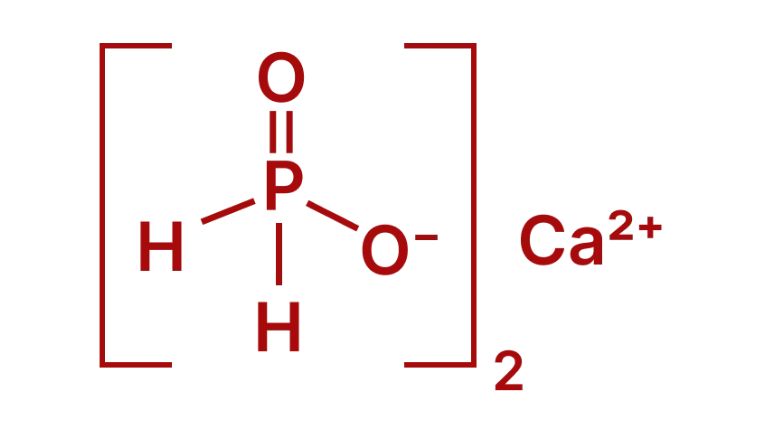
Calcium hypophosphite, also called calcium phosphinate, is the calcium salt of hypophosphorous acid. Its formula is Ca(H₂PO₂)₂, its CAS number is 7789-79-9, and its molecular weight is about 170.05 g/mol. It is supplied as a white, free-flowing crystalline powder that dissolves in water but is practically insoluble in alcohol.
It is used in three main areas:
- Pharmaceuticals and nutraceuticals: a bioavailable source of calcium and phosphorus in dietary supplements, supporting bone health and metabolic function.
- Veterinary medicine: an ingredient in livestock and poultry supplements to address calcium and phosphorus deficiencies, supporting skeletal development, energy metabolism, and fertility.
- Flame retardant additive: a non-halogenated, phosphorus-based additive for plastics and polymers.
Why Specifications Matter When Choosing Calcium Hypophosphite Suppliers
Each application puts pressure on a different parameter. A supplement manufacturer cares most about assay and heavy metals. A polymer compounder pays closer attention to moisture, particle behaviour and thermal stability.
On the flame-retardant side, published research gives a sense of why quality control matters. A 2019 study in Fire and Materials tested calcium hypophosphite at 10, 20 and 30 wt% in polyamide 6, PLA, thermoplastic polyurethane and PMMA. It found the flame-retardant effect varied by polymer type, and it works through foamed char formation in the condensed phase plus dilution and radical scavenging in the gas phase. If your compound is loaded at those levels, small differences in purity or impurities from lot to lot can show up in your fire-test results.
The powder is also hygroscopic, so quality can drift in storage if packing and handling are poor. A clear specification, backed by a batch COA, protects you from these surprises.
Key Calcium Hypophosphite Specifications to Verify
Use this table as a baseline when comparing quotes from different calcium hypophosphite manufacturers.
Parameter | Typical value | Why it matters |
CAS number | 7789-79-9 | Confirms identity and avoids mix-ups with calcium hypochlorite or calcium phosphate |
Formula / molecular weight | Ca(H₂PO₂)₂ / 170.05 g/mol | Needed for dosing and formulation calculations |
Assay | >98% | The core measure of purity |
Appearance | White crystalline powder | Off-colour material can signal contamination or degradation |
Arsenic, lead, iron | <2 ppm each | Critical for pharmaceutical and nutraceutical use |
Chloride | <50 ppm | Impurity control |
pH (5% solution) | 6.0–8.0 | Compatibility with your formulation |
Solubility | ~12.5 g/100 ml in water; insoluble in alcohol | Affects dissolution and mixing |
HS code | 28351010 | Needed for customs and import documentation |
Assay: look at the method, not just the number
Assay tells you how much of the material is actually calcium hypophosphite. Listings range from 98% to 99% minimum, and pharmacopoeia-style grades are often written as a range such as 98.0–100.5%. Always ask which test method produced the figure. A titration result and a result from another method are not directly comparable.
Impurities: ask for limits one by one
Arsenic, lead and iron limits are the ones that matter most for supplement and veterinary use. A good specification lists each element separately, rather than a single “heavy metals” line. Chloride is another useful indicator of how well the product was purified.
pH and solubility: check the test conditions
A pH value means little unless the solution concentration is stated. Compare like with like: a 1% and a 5% solution will not read the same. The same goes for solubility, which should be quoted at a stated temperature.
Appearance and particle behaviour
The expected appearance is a white crystalline powder. Some suppliers ship material that is visibly grey or off-white, so agree on what is acceptable before you order. For polymer compounding, particle size and flow can affect how evenly the powder disperses in the melt, so ask whether the supplier can share this information.
Which Specification Matters Most for Your Application
Application | Check first | Also confirm |
Nutraceuticals and supplements | Assay, arsenic, lead, iron | Pharmacopoeia grade if required, batch COA |
Veterinary premixes | Assay, heavy metals | Consistent powder flow, packing quality |
Flame retardant in polymers | Assay, moisture, particle behaviour | Thermal stability, lot-to-lot consistency |
This is a simple way to avoid paying for specifications you do not need, while making sure the ones you do need are written into the purchase agreement.
Safety, Storage and Transport Details Buyers Often Miss
Calcium hypophosphite is classified as a flammable solid (Category 1, H228). It ships as UN 3178, Class 4.1, Packing Group II, under the proper shipping name Flammable Solid, Inorganic, N.O.S. (Calcium Phosphinate). Tell your freight forwarder early, because flammable-solid shipments need correct labelling and documentation.
For storage and handling:
- Store in a dry, well-ventilated area with the container tightly closed.
- Keep it away from heat, hot surfaces, sparks and open flames.
- Keep it away from strong acids and oxidising agents.
- Do not heat it above 200°C, since decomposition can release phosphine gas.
- Avoid creating dust. Use gloves, eye protection and a dust mask where needed.
The Safety Data Sheet covers all of this, so have your safety team read it before the first shipment arrives.
How to Read a Calcium Hypophosphite COA
A Certificate of Analysis is a batch-level record, and it is the document that tells you what you are actually receiving. When a COA arrives, check these points:
- The product name and CAS number match your order.
- The batch number matches the batch on the packing.
- Assay, impurities, pH and appearance are reported as measured values, not just “complies”.
- The results fall within the specification you agreed.
- The test methods are named.
If you plan to use the material in regulated products, you should also confirm which pharmacopoeia standard, if any, the grade meets. Get this in writing before you order, not after the shipment lands.
Documents to Request From a Calcium Hypophosphite Manufacturer
A reliable manufacturer should provide these without delay:
- Batch-wise COA showing assay, impurities, pH and appearance
- Safety Data Sheet with the transport classification
- Technical specification sheet
- Packing details, minimum order quantity and dispatch timeline
Watch for red flags: no batch COA, no impurity limits, an assay figure with no method, or reluctance to share the SDS.
Sourcing Calcium Hypophosphite From a Manufacturer in India
Buyers purchasing calcium hypophosphite in bulk usually want three things: consistent quality, export-ready packing and clear paperwork. Neemcco supplies calcium hypophosphite in 25 kg HDPE bags with COA and SDS, and ships to buyers across global markets with export documentation and a stated dispatch timeline.
To get an accurate calcium hypophosphite price, send your required grade, quantity per order and destination. That lets the manufacturer quote the right MOQ, packing and lead time in one reply.
Frequently Asked Questions
Q1. Is calcium hypophosphite flammable?
Answer: Yes. It is classified as a flammable solid (Category 1, H228) and ships under UN 3178, Class 4.1. Keep it away from heat and ignition sources.
Q2. What is the HS code for calcium hypophosphite?
Answer: It falls under HS heading 2835.10, and 28351010 is the code commonly used. Confirm the exact code with your customs broker for your import country.
Q3. Is calcium hypophosphite the same as calcium hypochlorite or calcium phosphate?
Answer: No. They are different compounds with different CAS numbers and uses. Calcium hypophosphite is CAS 7789-79-9, so always quote the CAS number when ordering.
Q4. Is calcium hypophosphite soluble in water?
Answer: Yes. It dissolves in water at roughly 12.5 g per 100 ml and is practically insoluble in alcohol.
Q5. What is calcium hypophosphite used for?
Answer: It is used as a calcium and phosphorus source in supplements and veterinary products, and as a halogen-free flame retardant additive in plastics and polymers.
Q6. What documents should I ask calcium hypophosphite suppliers for?
Answer: Ask for a batch-wise COA, an SDS and a technical specification sheet. If you need a pharmacopoeia grade, request written confirmation as well.
Q7. What should I include in my quote request?
Answer: State the grade or specification you need, the quantity, the destination and the application. This helps the manufacturer confirm MOQ, packing and dispatch timing accurately.
Enquiry Now
Blog Categories
Recent Post
- Calcium Hypophosphite Specifications: What Industrial Buyers Should CheckCalcium Hypophosphite Specifications: What Industrial Buyers Should Check Two lots… Read more: Calcium Hypophosphite Specifications: What Industrial Buyers Should Check
- Sodium Hypophosphite in Electroless Nickel Plating: Process Chemistry ExplainedSodium Hypophosphite in Electroless Nickel Plating: Process Chemistry Explained Electroless… Read more: Sodium Hypophosphite in Electroless Nickel Plating: Process Chemistry Explained
- Why Two Electroless Nickel Baths With the Same Hypophosphite Concentration Can Perform DifferentlyWhy Two Electroless Nickel Baths With the Same Hypophosphite Concentration… Read more: Why Two Electroless Nickel Baths With the Same Hypophosphite Concentration Can Perform Differently